In the spirit of continuation and felicitations, we round up our top 10 champagne brands of all time. In our previous article, we covered Madame Clicquot, the glorious Krug Grande Cuvee, and many more.
The term champagne campaign was loosely coined and based on the meticulously planned invasion of the South of France. During World War II, Sir Winston Churchill motivated his troops by exclaiming: “Remember gentlemen, it’s not just France we are fighting for, it’s champagne!” It is also rumoured that Sir Winston Churchill consumed approximately 42 000 bottles of Pol Roger champagne during the course of his lifetime. As a champagne lover, as excessive as it sounds… I don’t blame him.
Below is our final five. Refer to the previous blog post if you have not read the first five yet (including a bonus mention).
1. Dom Perignon – P2

Prior to my love for Krug Grande Cuvee, I was obsessed with Dom Perignon. I still am. However, I have graduated to the P2. What is there not to love about this delicate liquid gold?
Moët & Chandon named their prestige cuvée after the French Benedictine monk Dom Pérignon. The monk made important contributions to the production and quality of champagne. He avoided processes such as re-fermentation during winemaking and a book on his winemaking guidelines was written by Canon Godinot.
There is a misconception that Dom Pérignon was blind. This is not true. The myth originated from his referencing of conducting “blind tasting of the wine” which involved him tasting the grapes without knowing the source of the vineyard. He did this to avoid influencing his perceptions. When he tasted the famous vintage, he exclaimed “Come quickly, I am tasting the stars.”
Dom Pérignon is a vintage champagne meaning that it is made only in the best years. Tom Stevenson (The British Wine Author) believes that “All vintages need at least 12 years ageing to nurture Dom Pérignon’s signature silky mousse”. However, the Dom Perignon P2 spends close to 15 years in the cellar. Brilliance takes time after all.
2. Louis Roederer – Cristal

Early 2000’s controversy aside, Louis Roederer remains one of the most prestigious Champagne houses. Apart from producing the fine champagne Cristal, I appreciate their crisp and well-balanced Louis Roederer Brut Premier Champagne. I would position it with Veuve Clicquot’s Yellow Label, easy to drink for every occasion.
Cristal was created in 1876 for the Tsar, Alexander II of Russia, and was regarded as the first prestige cuvée. Louis Roederer shipped a third of Cristal to Russia in the middle of the 19th Century as the Russians were fond of champagne then. Because the Tsar was afraid of assassination, he instructed Louis Roederer to change the colour of the bottle, which was initially dark green, because he wanted to ensure that there wasn’t a bomb hidden inside. Louis Roederer then commissioned a Flemish glassmaker to make a clear lead champagne bottle with a flat bottom. The champagne was then coined Cristal from thereon.
The 2000 Cristal vintage champagne is made of 55% Pinot Noir and 45% Chardonnay. Cristal produces an estimated amount of 300 000 to 400 000 bottles annually.
Cristal used to be the go-to champagne for hip hop stars. It was loved by and featured in the videos of Raekwon, 50 Cents, ASAP Rocky, The Notorious BIG, Jay Z and Tupac Shakur. When the Managing Director of the champagne brand was interviewed by The Economist in 2006, he had a few choice words about the association of the brand with hip hop culture. When he was asked whether he thought the association with hip hop culture would harm the brand, he was quoted saying “that’s a good question, but what can we do? We can’t forbid people from buying it. I’m sure Dom Pérignon or Krug would be delighted to have their business.” This led to the champagne brand being discarded by hip hop stars. Jay Z was quoted saying that he would never drink nor promote the brand ever again. This led to the brand losing its position and stature in hip hop culture.
Louis Roederer is a holder of Her Late Majesty the Queen of England’s Royal Warrant. They are one of the preferred champagne suppliers for the British Royal Family.
3. Moët et Chandon -Grand Vintage
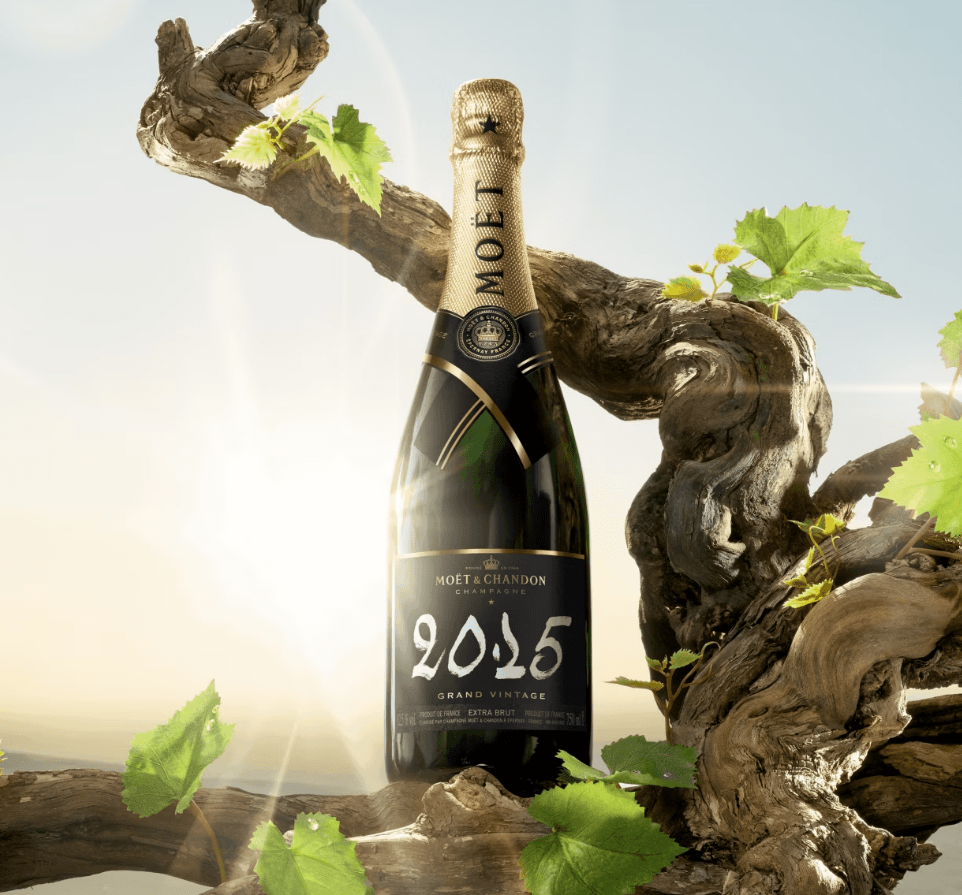
Moët et Chandon has to be everyone’s gateway champagne into the world of Champagne. And because it was the first champagne I had ever tasted; I can barely drink the Brut Imperial now. However, I am a very big fan of the Moët Vintage with its lingering toasted nuts and honey notes.
The pronunciation of this brand is always a debate at the dinner table. People love to pronounce it as “mo-way” while the champagne house pronounces it as “mo-wett”. I believe that it is because “mo-wett” feels harsh on the tongue and doesn’t sound as “luxurious”. We tend to ignore the Dutch origins of the founder Claude Moët who created the champagne brand in 1743. The brand was initially known as Moët et Cie. After Pierre-Gabriel Chandon joined the company in 1833, the name was then changed to Moët et Chandon.
Claude, his grandson Jean Remy Moët and Pierre-Gabriel Chandon grew the brand to become one of the largest champagne producers that sells over 28 000 000 bottles a year.
Moët is also the co-owner of the luxury goods conglomerate LVMH (Louis Vuitton Moët Hennessy).
In 1842, Moët marketed its first vintage. Their best seller, Brut Imperial, was launched in the 1860s. Moët then gave birth to their best-known label, Dom Pérignon named after the Benedictine monk who was known as the “Father of Champagne”.
There are only 5 million bottles produced in each vintage. It comprises of 60% Chardonnay and 40% Pinot noir.
Moët et Chandon received its Royal Warrant in 1893 during the Queen Victoria period and was reaffirmed in 1955 by HM Queen Elizabeth II.
4. Pol Roger – Brut Reserve
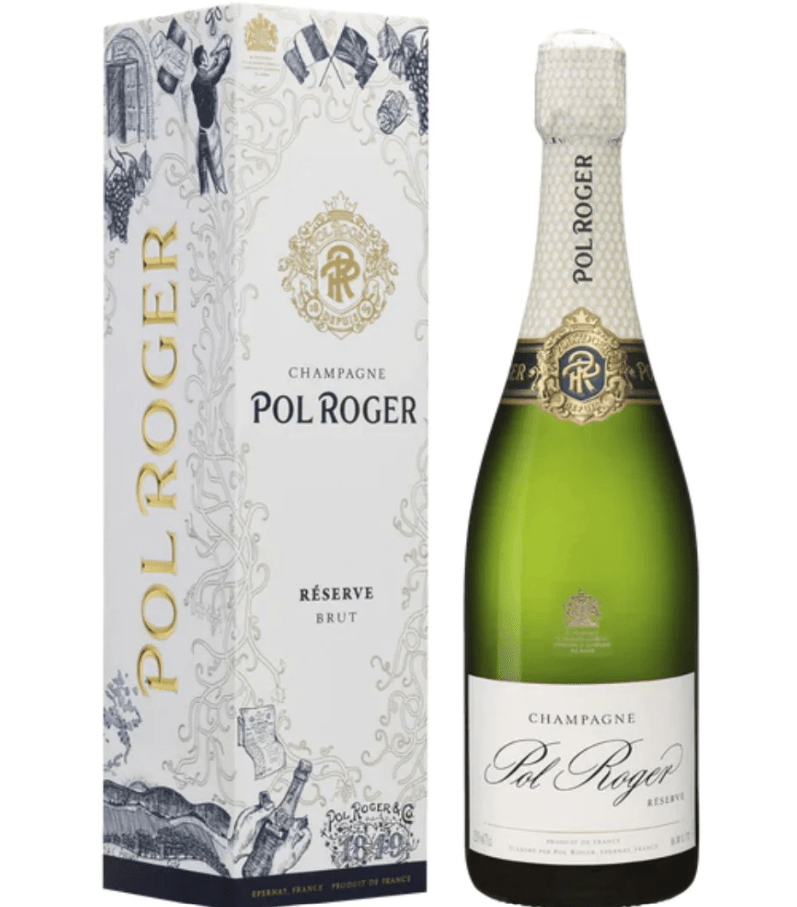
Pol Roger is a sophisticated and elegant champagne I get to enjoy on rare occasions. To be fair, I don’t necessarily go out of my way to look for it the way that I do with other champagne brands, however, when served, I thoroughly enjoy it. Light gold in colour with fragile vanilla and brioche notes, complemented by light flavours of fruits (pear and mango), honeysuckle and white jasmine.
Regarded as the “British” Champagne House, Pol Roger was founded in Aÿ in 1849 under the single name Roger by 18-year-old Pol Roger. The company then moved to Epernay in 1851. Initially, they did not own their own vineyards and produced solely for other large houses such as Perrier Jouët and Moët et Chandon. In 1855, Pol Roger acquired his own vineyards and focused on producing Brut Champagne, a favourite amongst the British. After his death in 1899, Pol Roger’s two sons changed the name of the brand to Pol Roger in order to honour their father.
The champagne house remains family owned and family-managed (5th generation) and produces an estimated 1.8 million bottles of champagne a year.
The Pol Roger family does not believe in pandering to media presence and associations with modern-day celebrities to a point where when a famous pop singer attempted to order a significant number of cases of Pol Roger for their wedding, the champagne house politely declined.
Pol Roger is a holder of Her Late Majesty the Queen of England’s Royal Warrant.
5. Lanson – Black Label
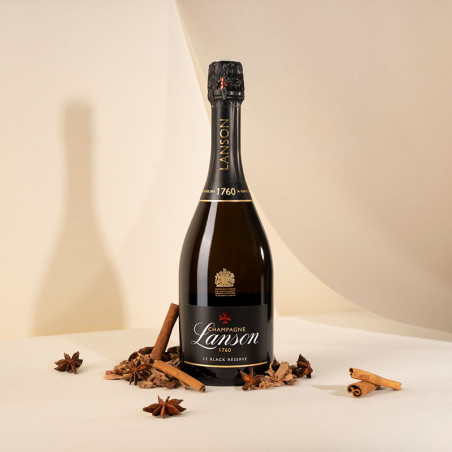
Like Pol Roger, I rarely go out of my way to shop for Lanson Black Label nor do I order it in a restaurant. However, the times that I have had the pleasure of drinking the champagne, I have enjoyed it. Perhaps, it is a matter of prioritizing it in 2024.
Maison Lanson was founded in 1760 by a magistrate who was an influential character in Reims society, François Delamotte, thus making it one of the oldest Champagne Houses. In 1798, François was succeeded by his son Nicholas-Louis who went on to form a partnership with Jean-Baptiste Lanson. The company was then named Lanson et Cie in 1837 and primarily focused on exporting champagne to foreign markets.
Maison Lanson’s philosophy is rooted in strategic partnerships based on shared values. The champagne brand has been a Royal Warrant holder since 1900 and in 2001, became the official champagne for the iconic tournament, Wimbledon. Later after its announcement as the official supplier to the British court in 1900, they also became the only Champagne of the principality of Monaco. The Maison developed a special design to include Monaco’s symbolic chessboard pattern as an ode to honour its appointment.
Conclusion
When it comes to champagne, we are spoilt for choice. There are plenty more that have not been featured here that I adore like the Barons de Rothschild’s Blanc de Blancs. You can’t finish them all after all. However, one should at least attempt to taste most of them in one’s lifetime.
 KING GINA